Military
Ship classes
All six ship types in detail — costs, roles, and when to build them.
Six ship classes. Each has a purpose. The skill is composing fleets — not just building the most expensive ship you can afford.
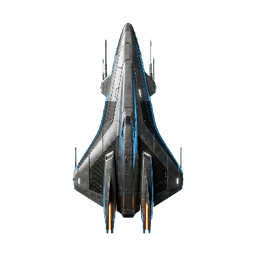
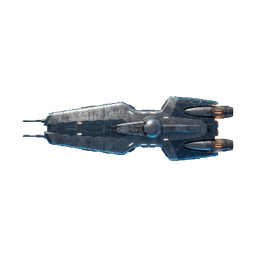
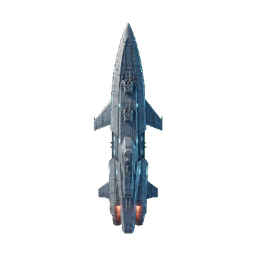
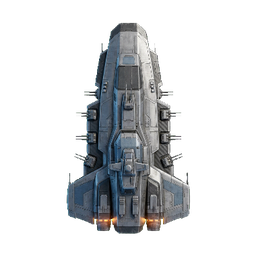
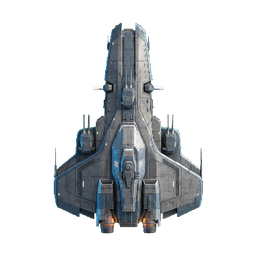
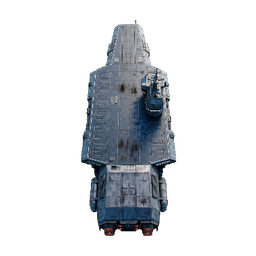
Scout Corvette
The eyes of your empire. Cheapest ship, fastest movement (3 hexes per turn), longest sensor range. Fragile in combat — a single Patrol Frigate kills two corvettes in one round.
Build when: Always. From turn 1, you should have at least one scout per direction you haven’t explored.
Don’t build for: Combat. A pure-corvette fleet loses to literally anything else.
Patrol Frigate
The backbone warship. Reliable, decent armour, decent damage. Movement 2. Affordable enough to mass.
Build when: Early-to-mid game pressure. Three frigates is a credible threat. Six frigates is a war.
Counter: Strike craft (Assault Destroyer) deal +50% damage to frigates. Don’t field pure-frigate fleets against opponents who can build destroyers.
Assault Destroyer
Fast strike craft. Movement 3 (matches scouts). Counters frigates and dreadnoughts (line ships). Vulnerable to itself — destroyer-on-destroyer is a coin flip.
Build when: You see your opponent massing frigates or capital ships. A fleet with a destroyer wing is hard to counter.
Don’t build for: Solo engagement. Destroyers want a parent fleet to escort.
Heavy Cruiser
Armoured capital ship. Movement 1 (slow). High damage, high health, expensive (400 energy / 200 minerals base). Counters nothing specific but is balanced against everything.
Build when: Mid-game, once your economy can sustain the upkeep. A heavy cruiser is the anchor of a fleet — surround it with frigates and destroyers.
Don’t build for: Mass production. You can’t afford ten of these. You can afford three. Make them count.
Battleship Dreadnought
The endgame capital. Movement 1. Massive damage, massive health, massive cost (600 energy / 350 minerals base). Counters nothing specific; counters by sheer presence.
Build when: Late game, after the Battleship Dreadnought tech unlocks. By this point you’ve either won or you’re gambling on a comeback.
Don’t build for: Quick wins. A dreadnought takes 5–8 turns to construct. If you build one when you needed five frigates, you’ve lost the war.
Fleet Carrier
Logistics support. Movement 2. Buffs adjacent friendly ships in combat (small but stacking). Doesn’t carry deployable fighters in current implementation — the strike-craft role belongs to destroyers.
Build when: Your fleets are large enough that the buff matters. A carrier with two cruisers and four frigates is dangerous in a way the same fleet without a carrier isn’t.
Don’t build for: Solo engagement. A carrier alone is a slow, expensive corvette.
City-Ship
The City-Ship is a mobile habitat, not a seventh combat class. Complete Mobile Habitat Architecture, then build it through an ordinary colony’s ship queue for 500 Energy and 280 Minerals over five turns. It launches as its own fleet, carries two population out of a capacity of three, moves two hexes per turn before terrain costs, and consumes 5 Energy in upkeep.
At a star system that is not controlled by a rival, spend 40 Energy to deploy. Its population then produces 2 Research each turn. A deployed City-Ship cannot move or invade; spend 20 Energy to relocate it first. The same ship, population, position, and name survive the transition and saved games. You can cancel a queued deployment or relocation before ending the turn. A travelling City-Ship can follow ordinary routes but cannot invade a rival colony.
City-Ships do not found or capture colonies, extend fleet support, or count toward any victory. Computer opponents do not build them in the current rules.
Build when: You want a small research outpost that can later move with your frontier.
Don’t build for: Combat, settlement, or a shortcut to a campaign victory.
Counter wheel
| Class | Counters | Countered by |
|---|---|---|
| Scout Corvette | — | Anything |
| Patrol Frigate | Strike craft (Destroyer) | Strike craft (Destroyer) — wait, see note |
| Assault Destroyer | Line ships (Frigate, Dreadnought) | Line ships (mutual) |
| Heavy Cruiser | — | — |
| Battleship Dreadnought | — | Strike craft |
| Fleet Carrier | — | — |
The counter relationship is bidirectional between line ships and strike craft. Line ship vs strike craft: both sides take +50% damage. The matchup favours whoever brings more total firepower; the counter is about amplifying an existing edge.
Capital ships and support vessels have no specific counter. They’re balanced against everything.
Composition rules
Three principles for a fleet:
- Always include scouts. Even a war fleet wants one corvette ahead, scouting the next hex.
- Mix line and strike. Frigates plus destroyers is the cheapest balanced fleet. The destroyers protect the frigates from enemy destroyers.
- Anchor with capital. Once you can afford it, one cruiser per fleet stabilises everything else. Two cruisers is overkill on small maps; on large ones it’s necessary.
A typical mid-game fleet: 1 scout, 4 frigates, 2 destroyers, 1 cruiser. That’s a credible attacking force.
Naming your fleets
Open one of your fleets and choose Rename to give it a memorable call sign. The name stays with the fleet through long routes and saved games. In multiplayer, rival fleet names remain hidden even when the contact itself is visible.
Reading fleets on the map
A fleet keeps the published silhouette, material, and colour of its strongest ship. An angular wedge outside the hull marks one of your fleets without recolouring the ship itself. Two parallel wedges mean two friendly fleets share the hex; three mean three or more. Selecting the exact fleet adds four square corner brackets, so ownership, group count, and selection remain readable by shape as well as colour. Capital ships — destroyers, cruisers, and battleships — are drawn larger than scouts and frigates, so you can judge the weight of a fleet at a glance before you ever open it.
When a resolved turn briefly shows one of your fleets moving, its wedge and selection brackets travel with the hull instead of appearing at the destination first. Movement and combat messages for screen readers wait until the turn summary closes, so they begin with the matching map presentation. Turn commands stay locked during that brief playback, while Skip remains available and settles the final map immediately. Reduced-motion settings settle the same map without animation and keep the same screen-reader messages. Queueing Survey or Colonize at the fleet’s current system does not silently discard an ordinary continuing route, so any movement later that turn still follows the journey you plotted.
When several friendly fleets share a hex, the map keeps one representative mark to stay readable. Open the fleet list and choose the exact group you want; its map mark and inspector then stay together as the fleet moves and when you return to a safe, visible point in the same saved campaign. A hex that also contains an unknown rival contact remains a location rather than exposing one exact fleet. Visible rival presence uses the same neutral contact flag regardless of who is behind it. The flag and every friendly hull disappear when the hex falls back under the fog of war.
Select a fleet to open its inspector. The inspector starts with identity and current orders, then shows route and arrival information when the whole journey is charted. Your own fleet also shows its cargo, upkeep, and any Undermaintained warning before less urgent details.
The roster gives every ship class its own silhouette, player-facing name, count, and hull integrity. Hull integrity is exact for fleets you own. ATK and DEF add the standard attack and defence values of every ship in your selected fleet. For example, one Scout Corvette and two Patrol Frigates read 18 ATK / 15 DEF. These are separate starting-profile totals, not a combined strength rating or a prediction of a battle.
If any ship profile needed for the total is unavailable, both readings say Unavailable instead of showing a partial or guessed number. The inspector leads with your fleet’s name and never substitutes a technical identifier for that identity.
Other empires reveal only what your scouts can actually confirm. Unknown composition, condition, stance, orders, and destination are labelled Unknown rather than guessed, while planned routes, cargo, and upkeep stay private.
Faction notes
Each faction flies a visually distinct authored hull. Early-game scouts and frigates retain their faction’s silhouette and palette, while the separate angular map key carries the unambiguous ownership cue.
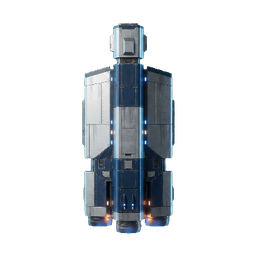
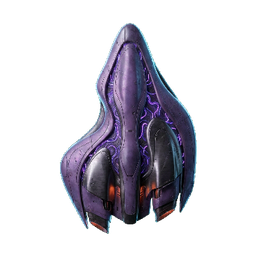
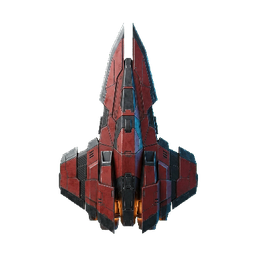
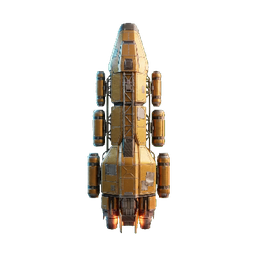
- Orion Hegemony gets -15% fleet maintenance — they can field larger fleets than anyone else.
- Terran Directorate gets +5% mineral production and -10% colony maintenance — they build ships faster, indirectly.
- Nyx Collective unlocks ship tech earlier via cheaper exploration research.
- Vanguard Nomads can reposition fleets through nebulae the rest cannot use.