Military
Fleet combat
How battles resolve, the six combat classes, City-Ship upkeep, and counter relationships.
When fleets fight
When two enemy fleets share a tile at the end of the movement phase, they fight. Combat is brief and decisive — most engagements last under ten rounds.
Several fleets from the same civilisation can fight together on one tile. Their ships combine their firepower for the battle, but survivors remain in their original fleets afterward.
Direct-fire attacks in the next fleet-turn update
An early local version of the planned fleet-turn rules also supports Attack fleet: choose one visible hostile fleet in clear weapon range, using a map target or the target buttons. A range outline shows the tiles your fleet can reach through terrain it knows, and the target forecast says how many of your ship groups can fire without revealing enemy return fire. Your fleet stays where it is and spends its one mission for a single exchange. Only ship groups that can reach the opposing position fire or return fire, including ships lost in that exchange; the defender keeps its own mission for its turn.
Damage remains on surviving ships, so another fleet can follow up against the same defender. The immediate result shows your own losses and remaining hull, without exposing an enemy roster. Skip and Reduce Motion reach the same result. The early local version also supports Attack colony through the same clear weapon-range check. Clearing its defending ships and garrison does not move your fleet. That same fleet can then Occupy with its unused Move. If the colony was already clear, Invade uses Move and Mission on arrival; an interrupted approach uses Move but leaves Mission available. Neither route continues past the captured colony. Losing a final colony scuttles that civilisation’s remaining fleets without presenting those removals as additional battles, and removes its plans; the last civilisation holding colonies wins immediately. These controls remain unavailable in ordinary campaigns. Every current production ship still has one-tile weapon range and current terrain does not block fire, so today’s available targets remain neighbouring tiles. Computer-controlled rivals use the same known clear weapon-range check. Longer ranges and blocking terrain can be assigned after playtesting without changing these rules. Default campaigns continue to use the shared-tile battles described above; see the roadmap for availability.
In the planned fleet-turn mode, every player can see whose turn it is and the current campaign phase. Each player’s exact remaining fleet actions, planned routes, production plans, spendable resources after those plans, costs, and rejected commands stay private to that player. Other players see movement, battle, and destruction cues only where their visibility after the action allows it; a briefly seen route cannot reveal a later hidden result. Hidden parts of a route and hidden fleet details are never included. Your own movement still reaches its confirmed endpoint before a destroyed fleet disappears, and Skip or Reduce Motion settles to the same final map state. This recipient-safe view keeps rapid movement and battle updates in order, with each announcement paired to the map moment it describes before a newer map state appears. It is prepared for a later online fleet-turn update; the current online mode continues to use the existing shared-turn flow. See the roadmap for availability.
Ship classes
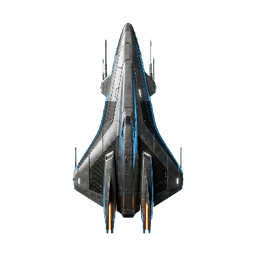
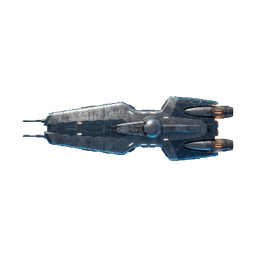
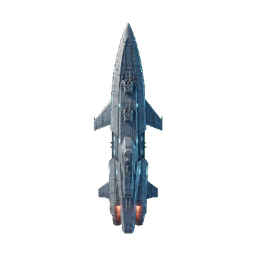
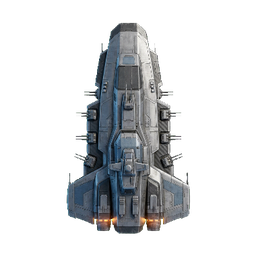
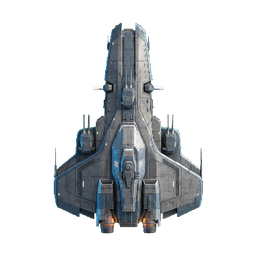
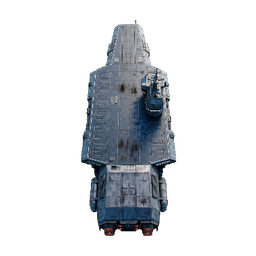
Six combat classes, each with a role:
- Scout Corvette — fast, fragile. Use for reconnaissance, not pitched battles.
- Patrol Frigate — backbone warship. Reliable damage, decent armour.
- Assault Destroyer — fast strike craft. Counters frigates and corvettes.
- Heavy Cruiser — armoured capital ship. Slow but punishing.
- Battleship Dreadnought — endgame capital ship. Slow, expensive, devastating.
- Fleet Carrier — fleet coordination and support. It does not extend colony supply range in the current rules.
The City-Ship travels as its own fleet and uses the support-vessel combat profile, but it is a mobile habitat rather than a seventh combat class.
Fleet upkeep
Every ship adds to its fleet’s Energy bill each turn before faction bonuses:
| Ship | Energy upkeep |
|---|---|
| Scout Corvette | 1 |
| Patrol Frigate | 2 |
| Assault Destroyer | 2 |
| Heavy Cruiser | 4 |
| Battleship Dreadnought | 6 |
| Fleet Carrier | 3 |
| City-Ship | 5 |
Add the ships in a fleet to find its normal bill. If that fleet ends beyond the six-hex support area around your colonies, the total rises to 150%, rounded up, with at least 1 extra Energy. A Scout and Patrol Frigate therefore cost 3 Energy while supplied and 5 while out of supply. See the Economy guide for route warnings and turn timing.
The selected-fleet panel keeps order, cargo, route, support, upkeep, attack, and defence readouts in aligned rows so changing values do not move nearby facts. Longer values shorten visually; hover, keyboard focus, or press and hold reveals the full text. Supply and route warnings remain full-width messages beneath those rows so important instructions can wrap instead of disappearing.
Counter relationships
The counter system is simple:
- Line ships (frigates, dreadnoughts) take extra damage from strike craft (destroyers).
- Strike craft take extra damage from line ships.
- Capital ships and support vessels have no specific counter — they’re balanced against everything.
A pure-frigate fleet beats a pure-corvette fleet but loses to a pure-destroyer fleet. Mix your composition.
How a battle resolves
Each round, both fleets fire simultaneously. Damage is applied at round end so casualties don’t shift mid-round. Combat ends when ships from no more than one civilisation remain, or after ten rounds in a draw. Retreat and surrender are not currently available.
You’ll see a combat summary after the engagement: which ships were lost, who won, and how the survivors look. The summary is also recorded in your turn log.
Hull integrity
Damage to surviving ships carries into later rounds and future battles. Your fleet’s ship roster shows Hull integrity as a whole-number percentage for each ship class, calculated from the exact remaining hull of every ship in that stack. Building another ship adds a fresh hull; it does not repair ships that were already damaged, and there is no automatic repair yet.
Enemy hull condition stays hidden with the rest of an unknown fleet composition. You only see exact condition for fleets you own. This condition readout does not change ship artwork on the galaxy map or add a damage or retreat marker there.
Defending colonies
Colonies have a built-in garrison — a small permanent defensive force. You can reinforce a colony by stationing fleets in the same tile.
To invade, select one of your fleets and give it a Move order onto the enemy colony’s star-system tile. Movement resolves first. Your fleet then fights any stationed ships and the colony garrison. If every defender falls and ships from just one attacking civilisation remain, that civilisation captures the colony. If multiple attackers survive, nobody captures it that turn.
An invasion continues across later turns while your fleet and the defenders remain. Select that fleet and choose Stop invasion before ending the turn if you want it to halt its route and abandon the attack.
A captured colony keeps its population and completed buildings, but its construction and ship queues are cleared. Ownership, vision, and income transfer to the new ruler. The same rules apply when you recapture one of your former colonies.
Losing your final colony eliminates your civilisation from the campaign. Capture every rival colony and you immediately win a Galactic Domination victory.
What’s coming
Combat animations, formation choice, and an in-engagement combat log are planned. You’ll be able to set retreat thresholds, prioritise targets, and review battles step by step.