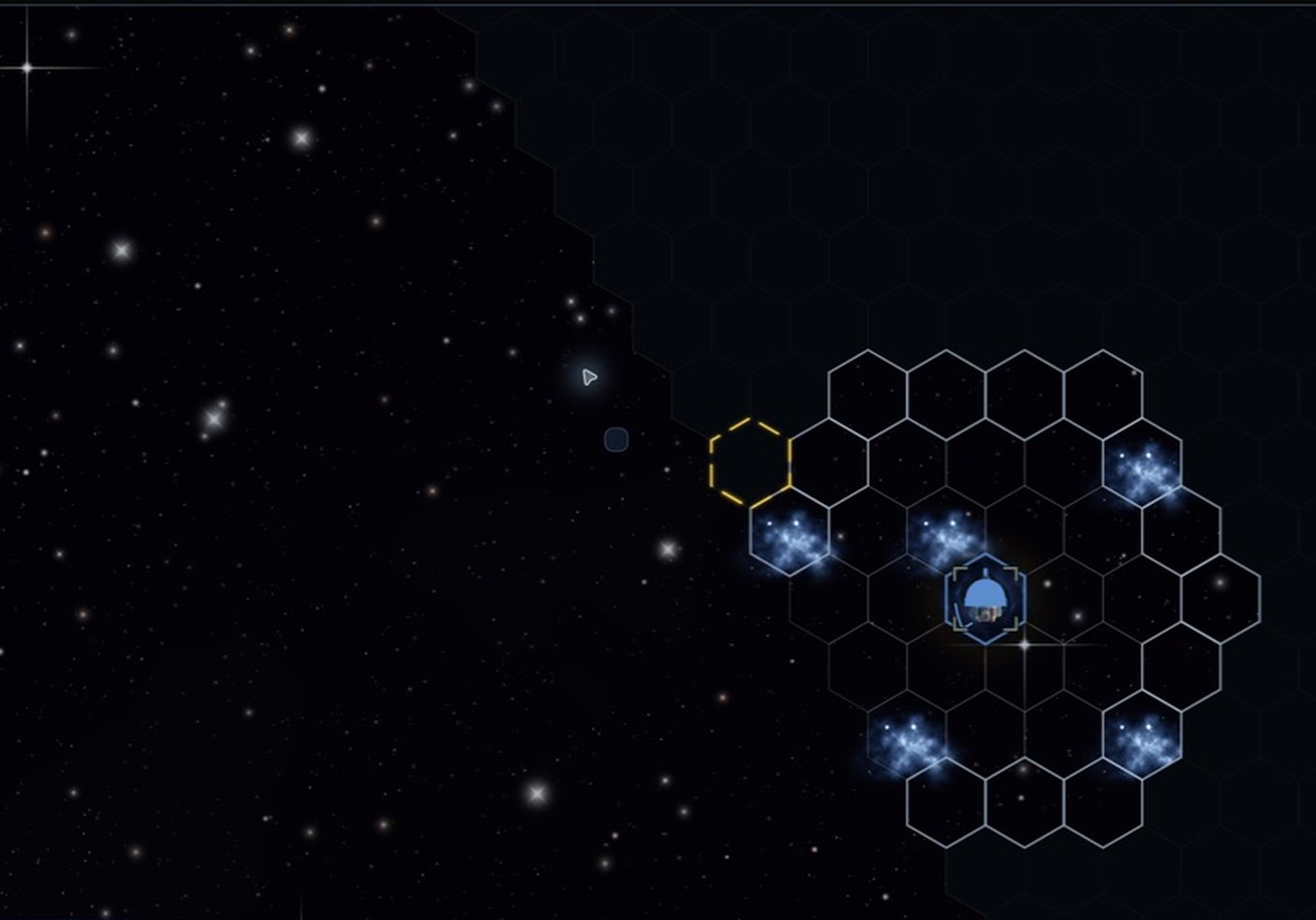
Turn-based 4X strategy
Command the void
Four civilisations, one procedural hex galaxy, and turns you can take whenever you like. Submit your orders and walk away — the galaxy resolves the round once everyone has played.
In development · macOS, Windows, Linux, iOS, Android
What you do here
Four verbs, in order
The genre’s four verbs, and what each one costs you in this game.
- 01
Explore
Push scouts into unread space. Nebulae and ion storms flow across the hex grid as clouds rather than tiles; asteroid fields, star systems, black holes and wormholes sit between them, each with its own travel rules. Every galaxy is generated fresh.
- 02
Expand
Survey a system, pay its settlement cost, and turn one colony into many. Each new colony also pushes normal fleet support six hexes further into the dark, so where you settle decides where you can fight.
- 03
Exploit
Balance eight resources, build trade hubs, and sign agreements that raise both partners’ income. Research you pause keeps its progress, so changing your mind costs time but never work.
- 04
Exterminate
When diplomacy runs out, fleet engagements resolve over up to ten rounds, with real counter relationships between the six ship classes. Conquest means finding every surviving settlement, not rushing one capital.
From the build
What it looks like right now
Unretouched screenshots of the development build, cropped only to remove the operating system’s window frame.
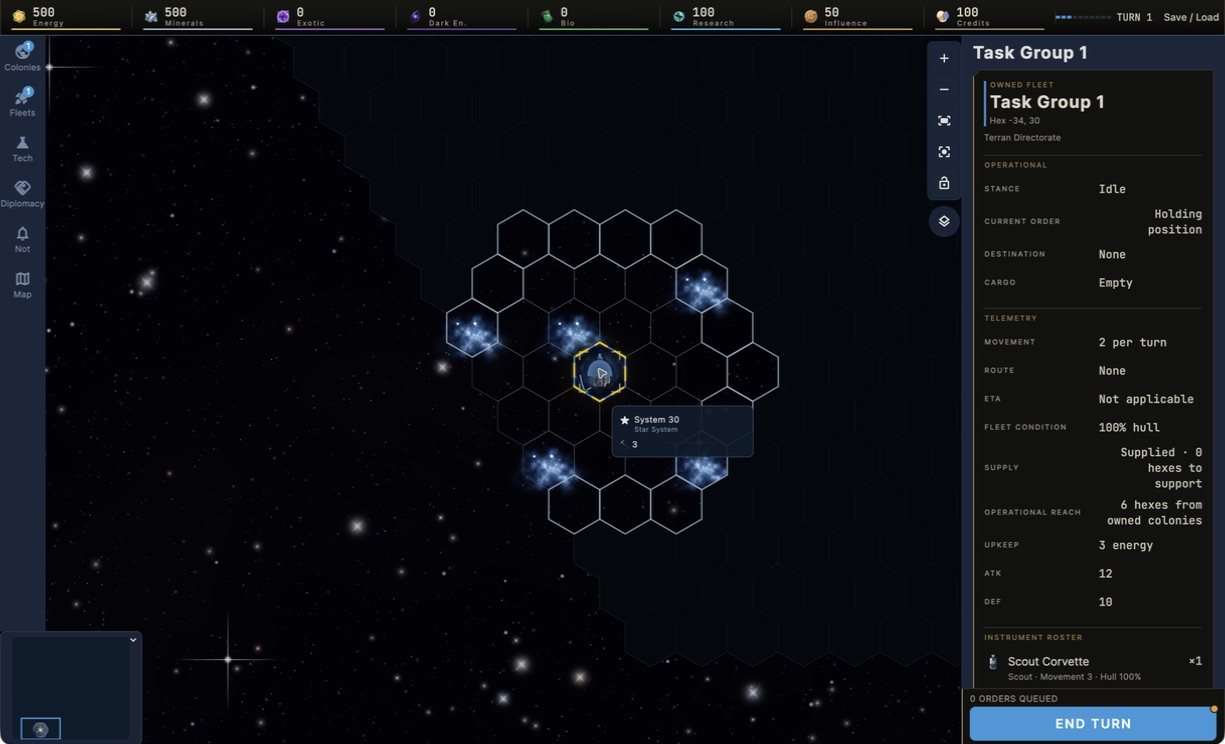
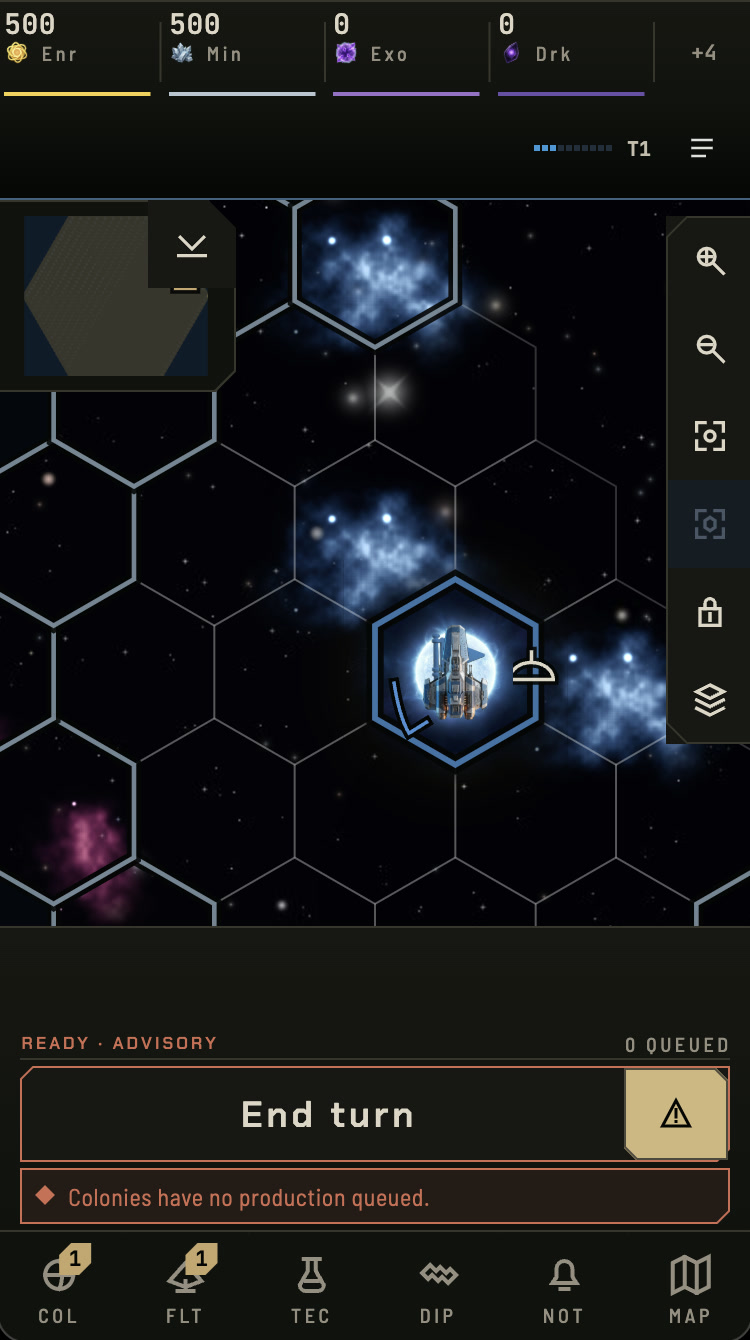
A note on the pictures
The console is being rebuilt
This site is drawn in the command-console language the game is moving to: machined plates, chamfered cuts, brass rules, bone text. The screenshots above are the interface that language replaces. Rather than show you mockups of a game that does not exist yet, we show you the one that does — and say plainly which parts are still in flight.
The roadmap is the source of truth for what is actually playable today.
Empire state
Eight resources, one strip
Energy moves fleets, minerals build them, research unlocks them, influence carries the Council. Exotic matter, dark energy and biological samples reward exploration. Credits fund trade hubs and open an economic path to victory.
- Energybasic
- Mineralsbasic
- Exotic matteradvanced
- Dark energyadvanced
- Bio samplesadvanced
- Researchbasic
- Influencebasic
- Creditsbasic


One continuous plate rather than eight boxes — because reading your empire should not mean crossing eight borders. Each value carries a 2px tick in its own colour, and a shortage is the only thing on the strip allowed to enclose itself.
Choose a civilisation
Four asymmetric starts
Different opening fleets, different technology, different curves into the mid-game. None of them is a reskin.
Terran Directorate
Industrial · methodical

A disciplined industrial empire built on pragmatic governance and efficient resource extraction.
Headline bonus+10% mineral production.
Open the dossierNyx Collective
Scholarly · compounding

A shadowy hive-mind civilisation that excels at research and biological adaptation.
Headline bonus+15% research point production.
Open the dossierOrion Hegemony
Militarist · forward

A militaristic empire that believes strength is the only true currency in the galaxy.
Headline bonus-15% fleet maintenance costs.
Open the dossierVanguard Nomads
Nomadic · connective

A fleet-based nomadic civilisation of traders and diplomats who call no single world home.
Headline bonus-15% nebula movement cost.
Open the dossier